Home / Services / Modernization

Service

Elevator modernization in Southwest Florida

A modernization is the largest single cheque most buildings write for vertical transportation. Scoped correctly it buys twenty years. Scoped by someone who profits from the padding, it buys a bigger invoice.

How much does elevator modernization cost?

Short answer

From tens of thousands of dollars for a single hydraulic unit to well into seven figures for a multi-unit traction group. The variables that move the number most are unit count, rise, whether the machine and ropes are reused, and how far behind current code the equipment has fallen.

We give you a written range after a survey, not before. Anyone quoting a modernization without opening the controller is quoting a template.

What makes us different

We bring every trade. You coordinate nobody.

Most elevator contractors bid the elevator and leave you to find an electrician, a fire alarm company and an HVAC contractor — then coordinate all of them around a schedule you did not write. That is how a modernization turns into a second job for a property manager.

LifTech bids the whole thing. Every sub-trade is in our scope, on our schedule, under our supervision. You get one contract, one point of contact and one company accountable for the finished result.

  • Elevator
  • Electrical
  • Fire alarm
  • HVAC & mini-split
  • 3-phase disconnects
  • Ball valves & oil lines
  • Control room
  • Permitting
  • Inspection coordination

If your equipment is 20 years old or more

Obsolescence is a pricing problem before it is a safety problem

Once equipment passes roughly twenty years, original manufacturer protection on the design has usually lapsed and production of the original boards has stopped. What that means in practice is that a part which used to be stocked becomes a specialist item, and the price stops being governed by anything except who still has one.

This is the point at which buildings start being quoted eye-watering numbers to keep obsolete equipment alive — when the same money, or less, buys a modern non-proprietary controller that any contractor can service afterwards.

$23,000Quoted to replace a single obsolete proprietary board
VERSUS
$10,000A new non-proprietary controller, serviceable by anyone

Figures from a real quote we were asked to review. Your equipment and building will differ — send us the quote and we will tell you which side of that comparison you are on.

Have your quote reviewed free

When modernization is the right answer

Not every ageing elevator needs one. The honest test is whether you are repairing the same subsystem repeatedly, whether parts remain obtainable, and whether the equipment can be brought to current code without replacing the things that make it work.

Where repair keeps buying six months at a time, modernization stops the bleeding. Where it does not, we will tell you to keep repairing — in writing.

What a modernization typically covers

Controller and drive replacement, door operator and door equipment, fixtures and signalisation, hoistway wiring, safety devices and governor work, and the code items that triggered the conversation.

On coastal buildings we also address what the salt air has done: rust remediation on rails and brackets, and 316L stainless fixtures where standard finishes will not survive the exposure.

Where the money hides

Line itemWorth asking about
Full controller replacementUsually necessary. Confirm it is non-proprietary before signing.
Complete rope replacementSometimes. Ask for the inspection finding that justifies it.
New machineOften not. Many machines outlive two controllers.
Cab interior packageCosmetic. We outsource this and say so rather than marking it up.
Proprietary monitoringAsk what happens to it if you change contractors.

Process

How the work runs

  1. Survey the equipment

    In the machine room with the controller open. No scope written from a photograph or a previous contractor’s report.

  2. Written scope, priced apart

    Code-required, life-extending and cosmetic work priced separately so you can decline any of them.

  3. Build and sequence

    Every sub-trade scheduled by us. Realistic lead times, staged so the building keeps as much service as the equipment allows.

  4. Test, inspect, hand over

    Adjustment done properly, re-inspection coordinated, and documentation left with you rather than kept on our server.

Recent work

A full modernization, stage by stage

Amberly Village, Naples. Drag the handle to compare, and pick any part of the job below. This is the same before-and-after record we hand every client at completion.

COMPLETE

NAPLES, FL

Amberly Village

A full hydraulic modernization taken from a 1980s relay controller through to a modern non-proprietary system — controller, power unit, door equipment, fixtures, pit and control room, with every sub-trade carried in our scope.

Building type
Residential condominium
Scope
Full hydraulic modernization
Controller
Non-proprietary
Also included
3-phase disconnects, ball valves & oil lines, control-room AC

Get your quote reviewed free

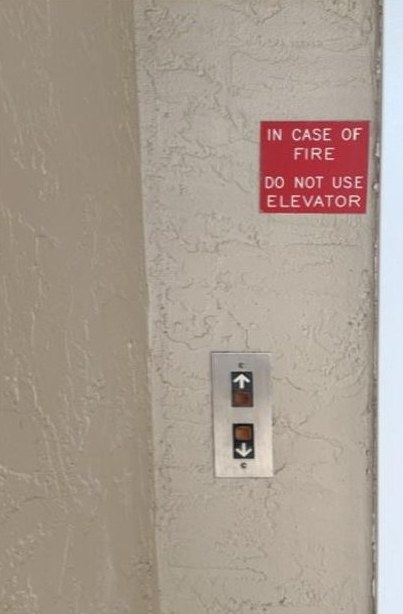
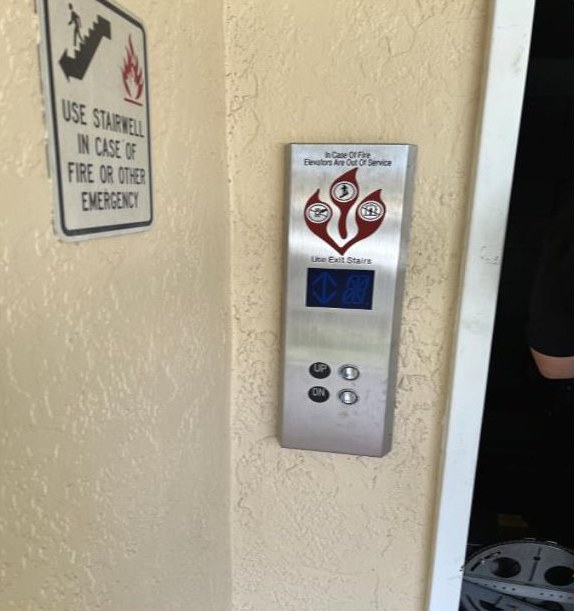
Amberly Village elevator hall station before modernization Amberly Village elevator hall station after modernization BEFOREAFTER DRAG TO COMPARE

The call station and fire service signage residents touch every day. New stainless fixture with a digital position indicator replacing a worn two-button plate.

Car operating panel rebuilt — new buttons, indicator and firefighter service, with the cab returns kept and cleaned rather than needlessly replaced.

The heart of the job. A 1980s relay controller with hand-lettered wiring gives way to a modern non-proprietary controller you are not locked into.

Overhead view of the power unit. New valve, new wiring, new guarding, and a layout a technician can actually work in.

Drive assembly and governor replaced, with new sheaves and correct alignment — where ride quality is won or lost.

Hoistway door equipment and locks renewed. Door trouble is the single most common cause of entrapment callbacks.

Ageing blue cabinetry and a stained floor replaced with a clean, sealed room and a new power unit. Condition here predicts equipment life.

Pit cleaned, sealed and fitted with new buffers and jack work. The part of the job nobody sees and every inspector checks.

Questions

Questions we get asked

How long will the elevator be out of service?

Per unit, typically weeks rather than days, and the honest answer depends on parts lead times. In multi-unit buildings we sequence the work so you keep at least one car running wherever the equipment allows it.

Do we need to hire a general contractor?

No. That is the point of our hands-off approach — electrical, fire alarm, HVAC and any other sub-trade is included in our bid and scheduled by us. You should not be project-managing your own elevator.

What does non-proprietary actually mean for a modernization?

It means the controller and diagnostic tools we install are not locked to us. If you want another contractor to bid your maintenance in three years, they can. Proprietary equipment removes that option — which makes it the cheapest line on the quote and often the most expensive decision in the contract.

Can you review a modernization quote we have already received?

Yes, at no charge and with no obligation. Send the scope and we will tell you what is required, what is optional and what we would question. Plenty of buildings take that back to their existing contractor and renegotiate.

Do you work on all elevator brands?

Yes. Scott’s background is with major manufacturer equipment and LifTech services all major makes and models. Because we work non-proprietary, we are not limited to one manufacturer’s parts channel.

Holding a quote, a notice or a contract?

Send it over. We read it free and tell you what we would question.